

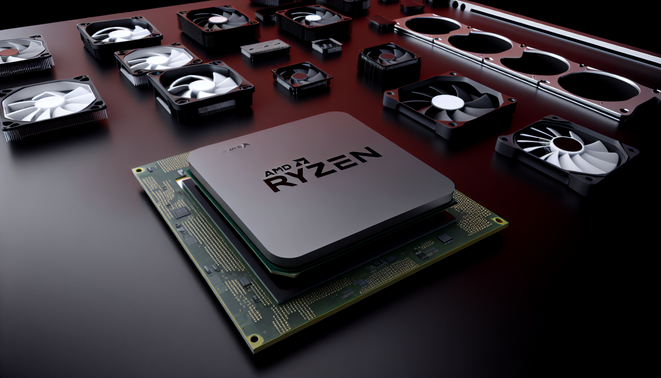
AMD Discontinues Ryzen 5000 Series Processors
AMD has recently made a pivotal decision regarding its Ryzen CPU lineup that is set to impact consumers and enthusiasts alike. The company announced that it will officially discontinue the manufacturing of its Ryzen 5000 series processors, shifting its focus to the newer Ryzen 7000 series. This transition is part of AMD’s broader strategy to streamline its product offerings and enhance performance benchmarks.
The implications of this decision are significant. For consumers, the discontinuation may lead to reduced availability of the Ryzen 5000 CPUs, which were known for their excellent performance-to-price ratio and strong multi-core capabilities, making them desirable for gaming and content creation. Enthusiasts who planned to build rigs around the previous generation may need to adjust their expectations and potentially invest in the latest technology. While the Ryzen 7000 series promises improved performance and efficiency, it comes at a higher price point, which may not appeal to all budget-conscious buyers.
Additionally, AMD’s focus on the newer architecture is expected to lead to further innovations in its upcoming products, which could eventually benefit consumers through enhanced features and capabilities. However, the transition period might create a gap in the availability of viable upgrade options for existing Ryzen users. For more insights on AMD’s innovative strategies and product lines, you can explore our articles on the latest in AMD technology here.
The Evolution of AMD’s Ryzen CPUs
AMD’s Ryzen CPU lineup has significantly transformed the landscape of computing since its introduction. Launched in March 2017, the Ryzen series was AMD’s response to Intel’s dominance in the CPU market, showcasing a commitment to high-performance multi-core computing. The Ryzen 1000 series, built on the Zen architecture, brought competitive performance and pricing, instantly attracting gamers and content creators alike.
The success of the Ryzen 1000 series was followed by the Ryzen 2000 series in 2018, which improved upon its predecessor with architectural enhancements that yielded superior performance per watt. This trend continued with the Ryzen 3000 series in 2019, which utilized the 7nm manufacturing process, offering even greater efficiency and performance. As of 2023, AMD has continued to innovate with their Ryzen 7000 series, incorporating advanced features like support for DDR5 memory and PCIe 5.0, solidifying their competitive position in both consumer and enterprise markets [Source: TechRadar].
Concerns Over Performance Downgrade in Ryzen 7000 Series
The recent downgrade to specific Ryzen CPUs has raised concerns among users and tech enthusiasts alike. This downgrade primarily affects the Ryzen 7000 series, specifically the Ryzen 9 7950X and Ryzen 7 7700X models, which exhibited a reduction in performance when running at lower power states due to firmware updates aimed at improving power efficiency. The main reason behind this decision involves addressing thermal management issues linked to these processors [Source: TechSpot].
The Impact of Stock Cooler Performance
The recent downgrade to lesser stock coolers could significantly impact CPU performance and thermal management. Inferior cooling solutions may lead to higher thermal throttling incidents, where CPUs automatically reduce their clock speeds to avoid overheating, consequently degrading performance [Source: Tom’s Hardware]. Research indicates that better cooling systems can facilitate higher boost clock speeds, enhancing gaming and computing performance.
Community Reactions to AMD’s Recent Move
AMD’s latest strategic announcement has sparked significant discussion within gaming and tech communities. Enthusiasts express optimism about AMD’s advancements in technology, particularly regarding their RDNA architecture while others voice skepticism about AMD’s capacity to maintain its growth trajectory [Source: Tom’s Hardware]. The feedback reveals a divided sentiment; celebrations of potential enhancements contrast with cautions regarding AMD’s ability to navigate market complexities [Source: PC Gamer].
AMD’s Innovations in Cooling Solutions
AMD has recently unveiled its latest cooling solutions, showcasing significant advancements designed to enhance thermal management compared to competitors. Noteworthy innovations include a dual-fan design allowing for better airflow and cooling performance, particularly effective in managing heat spikes during intensive tasks [Source: TechRadar].
Future Speculations on AMD’s Strategy
Speculation surrounding AMD’s recent downgrade revolves around potential shifts in strategy and future product offerings that could impact its competitive positioning in the semiconductor industry. Analysts suggest that AMD may pivot towards diversifying its product portfolio and enhancing process nodes to maintain market relevance against competitors [Source: AnandTech].
Conclusion on Ryzen’s Market Impact
The Ryzen product line has made significant strides in the CPU market since its introduction in 2017. AMD’s Ryzen chips have been praised for delivering competitive performance at lower price points than Intel counterparts. As AMD continues to ramp up production and improve its offerings, keeping an eye on AMD’s evolving roadmap can help consumers and tech enthusiasts anticipate future advancements and market dynamics [Source: Tom’s Hardware].
Sources
- AnandTech – AMD CPU Coolers in 2023: A Closer Look
- PC Gamer – AMD Open Source Collaboration in Gaming
- TechRadar – The History of AMD Ryzen CPUs
- TechSpot – AMD’s Downgrade of Ryzen CPUs: Performance Impacts
- Tom’s Hardware – Air Cooler vs. Liquid Cooler: Which is Best?
- Tom’s Hardware – AMD’s Supply Chain Challenges
- Tom’s Hardware – Which Ryzen CPU Cooler Is Best?
Recent Comments