

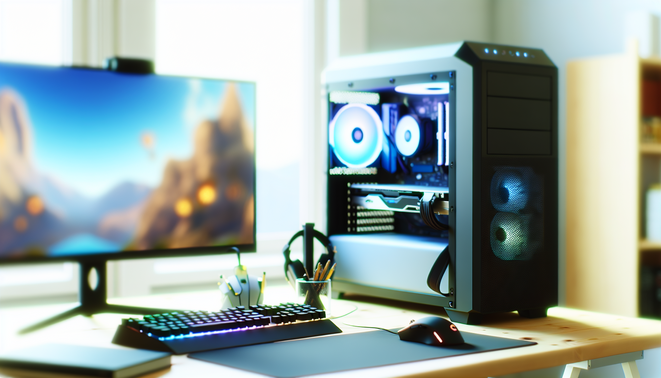
Introduction to Budget Gaming PCs
The popularity of budget gaming PCs has surged in recent years as more gamers seek cost-effective ways to enjoy high-quality gaming experiences. With advancements in technology, building a capable gaming system for under $500 is increasingly feasible. This accessibility is primarily due to the continuous reduction in hardware costs and the growing availability of budget-friendly components. Many gamers now turn to custom builds, which can provide better performance-to-cost ratios compared to pre-built systems. Key components like Ryzen CPUs and budget GPUs, such as the NVIDIA GTX 1650 or AMD RX 550, have made it possible to run modern titles smoothly without breaking the bank. Additionally, platforms like PCPartPicker help users compare prices and ensure compatibility, streamlining the building process. Moreover, the DIY nature of building a gaming PC allows for upgrades over time, further extending the system’s life and performance at a fraction of the cost. Gamers can also benefit from online communities that provide insights into optimal budget builds, making the knowledge accessible to newcomers. Overall, a budget gaming PC not only meets immediate gaming needs but also offers a pathway for future growth as technology evolves. For further insights on specific budget builds and component recommendations, you might find our guides on building a PC for under $500 very useful.
Choosing the Right Components
When building a budget gaming PC, selecting the right components is crucial for optimizing performance and ensuring compatibility. Here’s a breakdown of the essential components to consider:
- CPU (Central Processing Unit): The heart of your PC. For budget builds, the AMD Ryzen 5 series or Intel Core i5 processors offer excellent performance without breaking the bank [Source: Tom’s Hardware].
- GPU (Graphics Processing Unit): A dedicated GPU is essential for gaming. The NVIDIA GeForce GTX 1660 Super and AMD Radeon RX 6600 are popular choices in this price range, delivering solid performance for 1080p gaming [Source: TechSpot].
- Motherboard: Choosing the right motherboard ensures compatibility with your CPU and other components. A B550 motherboard for AMD CPUs or a B660 board for Intel users provides a good balance [Source: Tom’s Hardware].
- RAM (Random Access Memory): 16GB of RAM is the sweet spot for gaming. Opt for DDR4 with a speed of 3200 MHz or higher, considering reliable brands like Corsair or G.Skill [Source: PC Gamer].
- Storage: An SSD significantly enhances load times and overall responsiveness. A 500GB SSD will suffice for your OS and a few games, with brands like Samsung and Crucial recommended for reliability [Source: Laptop Mag].
By carefully selecting components within your budget, you can build a powerful gaming PC that meets your needs without overspending.
Recommended Parts for a $500 Build
Building a gaming PC on a $500 budget is feasible by selecting cost-effective components that still deliver solid performance. Below is a recommended list of parts for an entry-level gaming system:
- CPU: AMD Ryzen 5 3400G – This processor offers integrated Vega graphics and strong multi-threaded performance [Source: Tom’s Hardware].
- Motherboard: ASRock B450M Pro4 – A Micro ATX motherboard that provides compatibility with Ryzen CPUs and ample features [Source: TechSpot].
- RAM: Corsair Vengeance LPX 16GB (2 x 8GB) DDR4 3200MHz – This memory kit is perfect for gaming and multitasking [Source: Tom’s Hardware].
- Storage: Kingston A2000 NVMe PCIe M.2 500GB SSD – Offers fast load times and enhances overall system responsiveness [Source: TechRadar].
- Power Supply: EVGA 500 W1, 80+ WHITE 500W – A reliable PSU that ensures stable power delivery [Source: Tom’s Hardware].
- Case: NZXT H510 – This mid-tower case features good airflow and cable management options [Source: Tech Geek Base].
- Operating System: Windows 10 Home (OEM License) – Consider an OEM license for a more affordable yet legitimate OS [Source: Digital Trends].
With this setup, you’ll enjoy decent performance in many popular games while staying within a $500 budget.
Building Your PC: A Step-by-Step Guide
Follow these steps to assemble your budget gaming PC:
- Gather Your Tools and Components: Ensure you have all components at hand, including the CPU, motherboard, RAM, storage, power supply, and case.
- Prepare Your Workspace: Set up a clean workspace, preferably with an anti-static mat.
- Install the CPU: Align and secure the CPU in the motherboard socket.
- Attach the CPU Cooler: Apply thermal paste if necessary and secure the cooler.
- Install RAM: Properly insert the RAM modules into their slots.
- Prepare the Case: Remove side panels and install standoffs in the case.
- Install the Motherboard: Secure the motherboard in the case.
- Mount the Power Supply: Install the PSU in its designated space.
- Connect Storage Drives: Mount and connect your SSD and HDD.
- Install the GPU: Insert your graphics card and connect any necessary power cables.
- Cable Management: Organize cables for airflow and aesthetics.
- Final Checks: Double-check all connections before powering on.
- Power On: Connect peripherals and turn on the PC, boot to BIOS.
For a detailed visual guide, check out our article on How to Build a Gaming PC.
Installing the Operating System and Drivers
To install the operating system and drivers on your new computer, follow this comprehensive guide:
- Prepare for Installation: Use a bootable USB drive for your OS.
- BIOS Settings: Adjust boot order to prioritize the USB drive.
- Install the Operating System: Follow the on-screen prompts to install your OS of choice.
- Initial Setup: Complete the initial setup process and connect to the internet.
- Updating the Operating System: Check for and install any available updates.
- Install Drivers: Download the latest drivers from the manufacturer’s website for all hardware.
- Device Manager Check: Verify that all hardware components are functioning properly.
- Final Optimization: Adjust power settings and install essential software.
This will ensure your operating system and drivers are optimally configured for the best performance.
Gaming Performance Expectations
For a gaming PC built under $500, realistic performance expectations will largely depend on the choice of components, types of games played, and gaming resolution. Here are some key points to consider:
- Graphics Performance: With a budget of $500, integrated graphics or entry-level GPUs are capable of handling less demanding titles at lower resolutions [Source: Tom’s Hardware].
- Compatibility: It’s essential to choose the right components for balanced performance, generally aiming for at least 8GB of RAM [Source: PCWorld].
- Gaming Resolution: For optimal performance, gaming at 720p or 900p will produce smoother framerates [Source: PC Gamer].
In summary, a gaming PC under $500 is suitable for casual gamers looking to play less demanding games at lower settings.
Upgrades and Future-proofing
Here are key tips to keep in mind for future-proofing your setup:
- RAM Upgrades: Consider upgrading to at least 16GB, with the potential to expand to 32GB as applications become more demanding [Source: Tom’s Hardware].
- Graphics Card (GPU): Investing in a good quality GPU will become increasingly important as gaming demands rise [Source: PCWorld].
- Storage Solutions: Transition to NVMe SSDs for faster performance and better system responsiveness [Source: Digital Trends].
- Power Supply Units (PSUs): Ensure your PSU supports future components and has enough wattage [Source: Tom’s Hardware].
- Motherboard Compatibility: Make sure your motherboard can support future upgrades, focusing on chipset capabilities [Source: Lifewire].
By keeping these tips in mind, you can help ensure your PC remains a powerful asset for years to come.
Conclusion
Building a gaming PC for under $500 can provide an excellent balance between performance and affordability. With the right components, it’s possible to achieve solid gaming capabilities while customizing your build according to your preferences. Moreover, assembling your own PC can enhance your technical skills and broaden your knowledge about computer hardware. Studies have shown that PC gamers often benefit from higher frame rates and better graphics, resulting in a more immersive experience [Source: PC Gamer].
In conclusion, building a gaming PC for under $500 offers incredible value, allowing gamers to enjoy high-quality gaming experiences while remaining within budget. With thoughtful component selection and patience, anyone can embark on the journey of PC gaming without breaking the bank.
Sources
- Digital Trends – How to Install Windows 10
- Tech Geek Base – NZXT H510 Case Review
- TechSpot – Best Graphics Cards
- Tom’s Hardware – AMD Ryzen 5 3400G Review
- Tom’s Hardware – Best CPUs
- Tom’s Hardware – Best Motherboards
- Tom’s Hardware – EVGA 500 W1 500W Power Supply Review
- Tom’s Hardware – SDRAM Upgrade Guide
- Digital Trends – SSD vs HDD
- PC Gamer – Why a Gaming PC is Better than Console
- PC Gamer – How to Build a Gaming PC on a Tight Budget
- PCWorld – Building a Gaming PC
- PCWorld – The Best Graphics Cards
- Laptop Mag – What is an SSD
- Lifewire – Motherboard Guide for Beginners
- TechRadar – Kingston A2000 NVMe PCIe SSD Review
Recent Comments