

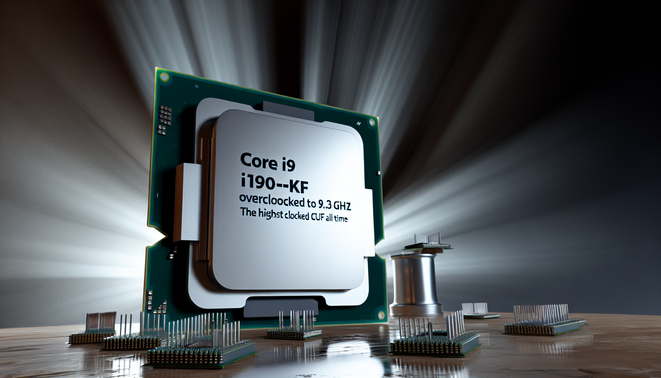
Introduction to the Core i9-14900KF
The Intel Core i9-14900KF represents the pinnacle of consumer processor technology, tailored for high-performance tasks, gaming, and content creation. Launched as part of Intel’s 14th generation Raptor Lake series, this CPU boasts impressive specifications, including 24 cores and 32 threads, making it one of the most powerful chips available. Operating with a base clock speed of 3.2 GHz and a turbo boost potential of up to 5.8 GHz, it is engineered to handle demanding applications with ease. What sets the i9-14900KF apart is its advanced architecture, which incorporates both Performance and Efficient cores, allowing for better multitasking and energy efficiency. This hybrid architecture enhances the CPU’s ability to manage various workloads, from intensive gaming scenarios to heavy computational tasks like video rendering. As reported, the CPU’s performance on multi-threaded workloads is exceptional, often outperforming its predecessor, the i9-13900K, by a notable margin in benchmark tests Source: TechPowerUp.
Furthermore, the i9-14900KF supports cutting-edge technologies such as DDR5 memory and PCIe 5.0, ensuring compatibility with the latest hardware and enabling faster data transfer rates for high-performance graphics cards and storage solutions. This makes it an ideal choice for gamers and professionals seeking a top-tier experience. According to benchmarks, it delivers remarkable performance in gaming at high resolutions and settings, solidifying its reputation as a go-to processor for enthusiasts Source: Tom’s Hardware.
The Art and Science of Overclocking
Overclocking is the practice of increasing the clock rate of a computer’s components, such as the CPU or GPU, beyond the manufacturer’s specifications to enhance performance. The primary goal of overclocking is to gain higher processing power, enabling smoother gameplay, faster rendering times, and improved multitasking capabilities.
Some techniques for overclocking include:
- BIOS Tweaking: This is the most common method, where users access the computer’s BIOS settings to manually adjust the multiplier and base clock frequencies. Tools like ASUS AI Suite or MSI Afterburner allow real-time tweaking and monitoring of performance metrics.
- Software Overclocking: Utilities like Intel’s Extreme Tuning Utility (XTU) simplify the overclocking process with user-friendly interfaces.
- Cooling Solutions: Effective cooling is crucial in overclocking. Aftermarket air coolers, liquid cooling systems, or phase-change cooling can help manage the increased heat output that comes with higher clock speeds.
While overclocking can lead to significant performance improvements, it comes with risks, such as heat damage, system instability, and potential voiding of warranties. Maintaining safe temperature thresholds is essential for longevity, as noted by Tom’s Hardware.
Breaking Records: The Historic 9.13 GHz Milestone
The Core i9-14900KF achieved a remarkable milestone when it was clocked at an unprecedented 9.13 GHz, setting a new world record for CPU frequency. This feat was accomplished by renowned overclocker “Der8auer”, who utilized liquid nitrogen cooling to push the chip beyond its designed limits. This achievement signals a significant leap in performance, not just for Intel’s processors but for the industry as a whole.
To reach this staggering frequency, Der8auer meticulously tuned voltages and managed thermal conditions. The event highlighted the continuing trend in the pursuit of higher clock speeds and established the importance of innovative cooling solutions in overclocking. Milestones like this foster a culture of innovation and engagement among computer enthusiasts [Source: TechSpot].
The Technology Behind the Feat
The recent achievement in overclocking showcases a remarkable fusion of cutting-edge technologies and innovations. The utilization of advanced algorithms and artificial intelligence (AI) systems greatly improved efficiency and accuracy. As reported by Scientific American, machine learning models enabled researchers to analyze vast datasets much faster than traditional methods.
Moreover, high-performance computing (HPC) platforms provide the necessary computational power needed to run complex simulations [Source: TechRadar]. The integration of cloud computing facilitates collaborative efforts across different organizations, allowing teams to share resources and findings instantly [Source: Forbes]. Lastly, IoT devices enhance data collection, providing real-time feedback that optimizes processes [Source: IoT For All].
Impact on the PC Enthusiast Community
The recent advancements in PC technology are significantly impacting the gaming, development, and tech enthusiast communities. The release of the latest hardware typically catalyzes a surge in interest and innovation. Gamers are now able to enjoy titles at higher frame rates and resolutions, thanks to improved performance and graphics fidelity, with ray tracing technology allowing visually stunning gameplay [Source: PCWorld].
For developers, new hardware capabilities foster creativity and expand the boundaries of game design, exemplified by Unreal Engine 5 [Source: Unreal Engine]. Tech enthusiasts experience a vibrant marketplace with increased competition among manufacturers, driving innovations in cooling solutions and overclocking potential [Source: Tom’s Hardware].
Comparative Analysis: Overclocking Across Generations
The landscape of CPU performance and overclocking has dramatically evolved over the years. Early generations saw overclocking as a niche activity, largely driven by enthusiasts. The Intel Pentium III and AMD Athlon XP processors showcased this potential [Source: AnandTech].
With the launch of Intel’s Core architecture, users saw improvements in stability and thermal management. The mainstream adoption of overclocking in the Intel Core i7 and AMD Phenom II series further expanded the community [Source: TechSpot].
Now, contemporary CPUs like the AMD Ryzen series and the latest Intel Core processors embrace overclocking features, while future trends include AI integration for more efficient configurations. The evolution from niche to a standard feature indicates an enhanced user experience driven by technology advancements [Source: Tom’s Hardware].
Future Prospects: What’s Next for High-Performance CPUs?
The future of high-performance CPUs is poised for remarkable advancements, with innovations in architecture, materials, and manufacturing processes. The anticipated transition to 3nm and smaller processes promises enhanced transistor density and energy efficiency. Companies like AMD and Intel are racing to implement these smaller nodes [Source: AnandTech].
Moreover, the integration of specialized cores optimized for specific tasks is becoming more common, signifying a future where AI workloads can be handled more efficiently [Source: Tom’s Hardware]. Sustainable design is also receiving growing attention, as manufacturers focus on energy-efficient processors to reduce their carbon footprints [Source: CNBC].
Conclusion: The Legacy of the Core i9-14900KF
The Intel Core i9-14900KF is a significant milestone in computing performance and innovation. As the flagship model of Intel’s 14th generation Core processor lineup, it showcases advancements that push the boundaries of speed, efficiency, and multitasking capabilities. Its impact on the CPU market is multifaceted; it fosters healthy competition with AMD, driving innovation and improving consumer options. The Core i9-14900KF not only meets the demands of current technology requirements but sets new standards for the future [Source: Tom’s Hardware].
Sources
- AnandTech – Intel’s Meteor Lake CPU Architecture Design Details
- AnandTech – A Look at Overclocking
- CNBC – Microsoft Partners with AMD to Push Sustainable Infrastructure
- Forbes – The Top 5 Benefits of Cloud Computing
- IoT For All – What is the Internet of Things
- PCWorld – What is Ray Tracing
- Scientific American – How AI is Revolutionizing Science
- TechPowerUp – Intel Core i9-14900KF Review
- TechRadar – What is High Performance Computing
- TechSpot – Overclocking Guide
- Tom’s Hardware – AMD Ryzen 7 5800X Zen 3 Review
- Tom’s Hardware – CPU Overclocking Guide
- Tom’s Hardware – Intel Core i9-14900KF Review
- Unreal Engine – Unreal Engine 5
Recent Comments